

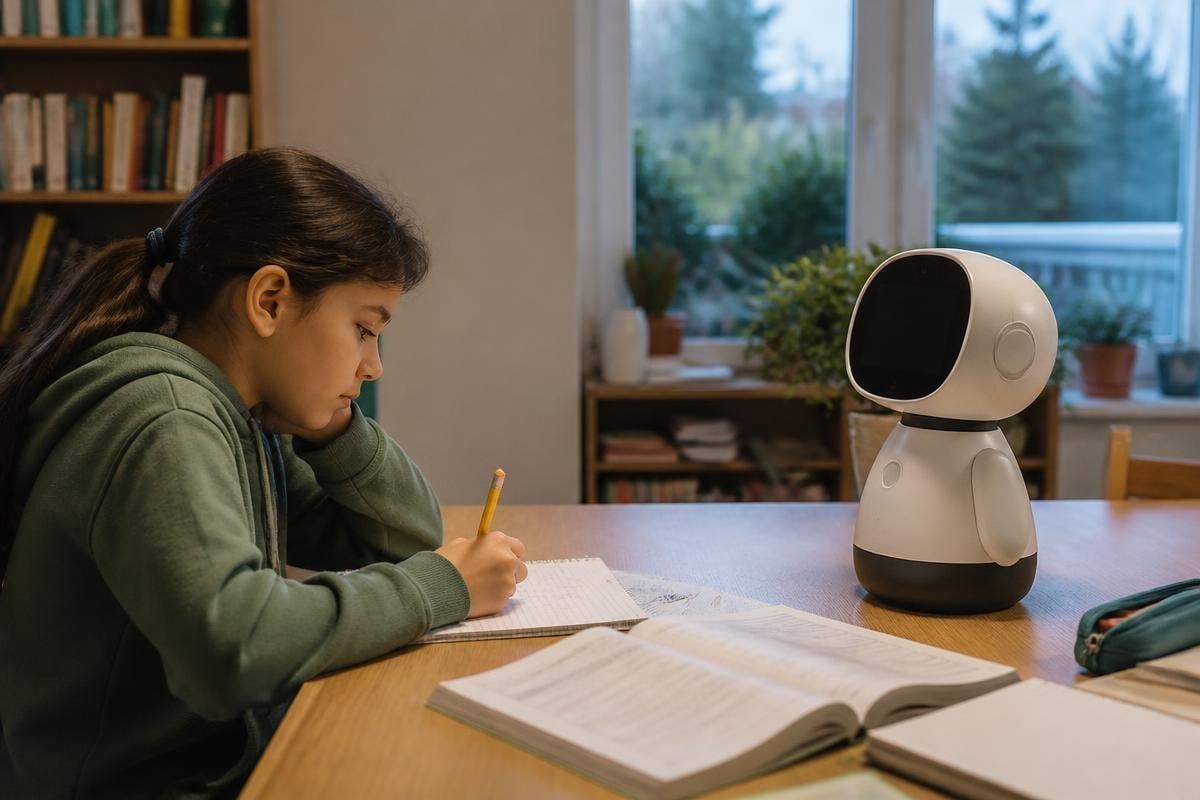
A robot tutor can explain a maths step at 8 p.m., repeat the explanation, and give a student a place to start. That makes it useful homework help, but replacement depends on what the student needs beyond an answer.
Quick read
- Best use: guided practice after class
- Main risk: a confident wrong answer can send learning off course
- Keep a teacher involved: review progress, confusion, and repeated errors
What a robot tutor can do well
Homework help often fails at the first small block. A student gets stuck on one fraction, word, or step, then stops. A robot tutor can respond to that narrow problem without making the student wait for the next lesson or find an adult who has time.
The useful part is the back-and-forth. The system can ask what the student tried, show a worked step, and ask for another attempt. That process gives the student a path through the task instead of handing over an answer to copy.
The tutor may also adjust the pace. A student who needs three examples can ask for three; another can move on sooner. The benefit depends on the system giving correct explanations and letting the student do enough of the work.
That last condition matters. Homework is practice, so a tool that completes every problem removes the part that shows whether the lesson stuck.
Where the teacher still matters
A teacher sees more than the answer on a page.
They can notice that a student has stopped taking risks, is guessing from a picture, or keeps making the same error across different tasks. A robot tutor needs a clear signal before it can respond to those wider problems.
Teachers also know the lesson behind the homework. They can connect a writing task to class discussion, change an assignment when a student needs another route, and decide when the problem is effort, confusion, language, or something outside school.
Such a tool can support that work when its records are clear. A teacher could use a short report showing which questions caused trouble and which hints the student needed. The report should support a conversation, not become a score that labels the student.
A robot tutor’s limits make more sense beside other systems used around people. Robot24.com’s robotics coverage can place classroom claims beside named machines and test settings, with human oversight kept in view. The next section tests the practical risks, where a wrong hint or weak handoff affects a student’s work.
The risks are practical, not abstract
An incorrect answer is the most direct problem. A student may accept it because the reply sounds neat and certain. Any school or family using a robot tutor needs a way to check answers against class materials, a textbook, or a teacher.
Privacy also needs a clear rule. Homework systems may receive names, writing, voice recordings, or notes about learning needs. You should know what the service stores, who can see it, and how deletion works before a child uses it.
Dependence is another concern. If the tool gives a hint after every pause, the student may stop trying before the hard part begins. A better setup delays help, asks the student to show a first attempt, and makes the final answer the student’s job.
Access matters too. A robot tutor that needs a paid device, a fast connection, or a quiet room won’t fit every home. That cost can widen the gap between students unless the school supplies an equal option.
A practical decision guide
Before you use a robot tutor for regular homework, check these points:
- Set the task: use it for hints, examples, and checks rather than finished answers.
- Check the source: compare difficult explanations with the teacher’s method or class book.
- Protect the child: review data storage, account access, recordings, and deletion rules.
- Watch the pattern: tell the teacher if the same topic causes trouble several times.
- Keep the handoff: let a teacher change the plan when the tool cannot explain the problem clearly.
This approach gives students help at the moment they need it while keeping teaching, judgment, and care with a person. I’d use a robot tutor as an extra practice partner, not as a replacement for homework support from a teacher or family member.
The useful test is simple: after using the tool, can the student solve a similar problem alone? If the answer stays no, the robot is completing homework, not helping the student learn.
