

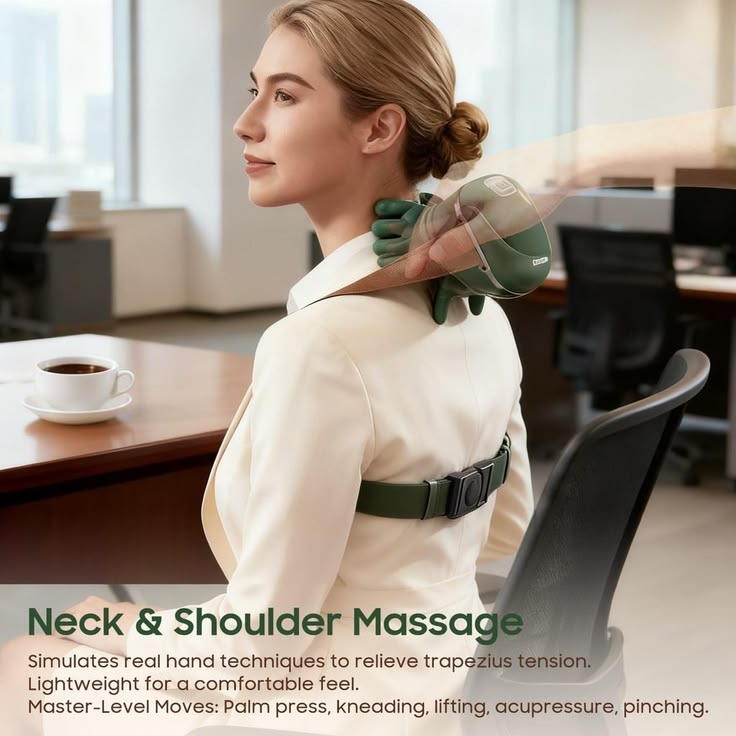
The cervical spine is one of the most delicate and important structures in the human body. It supports the weight of the head, enables a wide range of motion, and protects critical nerve pathways connecting the brain to the rest of the body. Because of its constant activity and sensitivity, it is also one of the most common areas for tension, stiffness, and pain.
Hand Simulated Neck shoulder massager pressure technology in modern massagers is designed not only to relax muscles but also to align with the natural curvature and biomechanics of the cervical spine. This alignment is what makes these devices more effective and comfortable than generic, one-size-fits-all pressure systems.
Understanding the Cervical Spine Structure
The cervical spine consists of seven vertebrae (C1–C7) that form a gentle forward curve. This curve is essential for balance, posture, and shock absorption.
Key Functions of the Cervical Spine
- Supports the weight of the head
- Allows rotation, flexion, and extension
- Protects spinal nerves and blood vessels
- Maintains posture and alignment
Even small deviations from this natural alignment can lead to discomfort and muscle strain.
Why Neck and Shoulder Tension Develops
Most cervical discomfort is not caused by the bones themselves, but by surrounding muscles.
Postural Imbalance
Forward head posture from screen use places constant strain on the upper cervical region and trapezius muscles.
Muscle Overcompensation
When certain muscles weaken, others overwork to compensate, creating uneven tension patterns.
Reduced Movement
Long periods of sitting reduce circulation and stiffness increases in supporting muscles.
What Hand-Simulated Pressure Actually Means
Hand-simulated pressure refers to mechanical systems designed to replicate the movements and force distribution of human hands.
Core Elements of Simulation
- Thumb-like targeted pressure
- Palm-like broad compression
- Variable rhythm and intensity
- Multi-directional movement
These elements work together to mimic how a professional therapist interacts with the neck and shoulder region.
How Hand-Simulated Pressure Aligns with Cervical Anatomy
1. Following the Natural Curve of the Neck
Ergonomic massagers are shaped to match the cervical curvature.
Why This Matters
When pressure follows the natural curve:
- Muscle contact is more consistent
- Strain on bones is minimized
- Relaxation is more even across both sides
2. Targeting Muscle Attachment Points
The cervical spine is supported by key muscles that attach at specific points.
Common Target Areas
- Base of the skull (occipital region)
- Upper trapezius
- Levator scapulae
- Upper thoracic transition zone
Hand-simulated nodes are positioned to align with these high-tension zones.
3. Balanced Bilateral Pressure
The neck and shoulders require symmetrical support.
How Devices Achieve Balance
- Equal pressure on both sides of the trapezius
- Centered alignment along the spine
- Even distribution of kneading nodes
This prevents uneven strain and improves posture alignment during use.
4. Depth Adaptation to Muscle Layers
Different cervical muscles lie at different depths.
Surface Layer
Relieves superficial tightness and stress buildup.
Deep Layer
Targets chronic stiffness and trigger points near the spine and shoulder junction.
Hand-simulated systems adjust pressure depth to engage both layers effectively.
Why Alignment Improves Effectiveness
Proper anatomical alignment is what allows massage to feel natural and effective.
Reduced Muscle Resistance
When pressure aligns with muscle structure, the body relaxes instead of resisting.
Improved Circulation
Aligned pressure helps open restricted blood flow pathways.
Better Nerve Comfort
Proper positioning avoids unnecessary compression of sensitive nerve areas.
The Role of Ergonomics in Cervical Support
Ergonomic design is essential for maintaining alignment during massage.
Contoured Structure
Devices are shaped to cradle the neck and shoulders, ensuring stable positioning.
Stable Contact Points
Consistent contact ensures pressure is delivered exactly where needed.
Adaptive Fit
Slight flexibility allows the device to accommodate different body shapes.
How Hand-Simulated Motion Enhances Alignment
Beyond shape, motion plays a critical role in cervical support.
Dynamic Pressure Adjustment
Pressure changes based on movement cycles, mimicking human adaptability.
Rotational Kneading
Circular motion aligns with natural muscle fiber direction.
Alternating Focus Areas
Shifts in pressure prevent overstimulation of a single point.
Benefits of Proper Cervical Alignment During Massage
1. Reduced Neck Stiffness
Aligned pressure helps release tension without straining joints.
2. Improved Postural Awareness
Regular use can help users recognize and correct poor posture habits.
3. Enhanced Mobility
Looser cervical muscles allow a greater range of motion.
4. Long-Term Tension Reduction
Consistent alignment helps prevent chronic tightness buildup.
Heat’s Role in Cervical Support
Heat therapy enhances anatomical alignment benefits.
Muscle Relaxation
Warm muscles adapt more easily to guided pressure.
Increased Flexibility
Heat improves tissue elasticity, making alignment more effective.
Faster Recovery
Improved blood flow accelerates muscle recovery in the neck region.
Common Mistakes That Disrupt Alignment
Poor Device Positioning
Misalignment reduces contact with key cervical muscles.
Slouching During Use
Forward posture shifts pressure away from intended areas.
Overuse of High Intensity
Excessive force can override natural muscle relaxation response.
Why Cervical Alignment Matters More Than Power
Strong pressure alone does not guarantee relief.
Precision Over Force
Accurate targeting of muscle groups is more important than intensity.
Natural Response
When aligned correctly, muscles respond more quickly and comfortably.
Reduced Risk of Discomfort
Proper fit prevents unnecessary strain on sensitive cervical structures.
Final Thoughts
Cervical spine support depends not only on pressure but on how closely that pressure aligns with natural anatomy. Hand-simulated massagers are designed to follow the curvature of the neck, target key muscle attachment points, and distribute force in a balanced, controlled way.
When combined with ergonomic design, heat therapy, and adaptive motion, this alignment allows for deeper relaxation and more effective tension release. Instead of forcing the neck to adapt to the device, modern technology adapts to the neck—supporting both immediate relief and long-term cervical comfort.
