

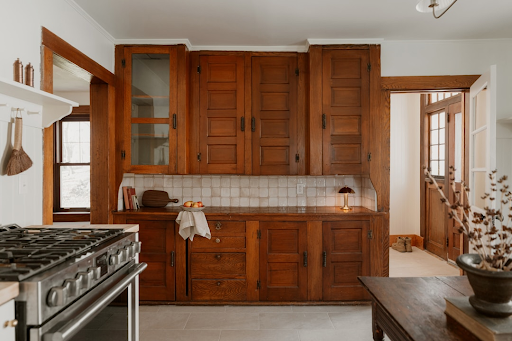
A common question homeowners ask during a renovation is: how deep are normal kitchen cabinets? Knowing this helps you plan your layout, choose the right appliances, and maximize your storage. It ensures your dream kitchen actually functions as well as it looks.
In this guide, we will break down everything you need to know about standard cabinet depth. We’ll cover base, wall, and tall cabinets, along with tips for choosing the right size for your home.
Why Cabinet Depth Matters in Kitchen Design
When we talk about kitchen cabinetry measurements, depth often gets overlooked. Most people obsess over the height or the finish. But the depth determines your “footprint”—how much floor space your cabinets consume.
If your cabinets are too deep for a narrow room, you lose valuable walkway space. If they are too shallow, you lose storage space for big items like stand mixers or crockpots.
Proper depth ensures better ergonomics. You shouldn’t have to strain to reach the back of a shelf. It also ensures your countertop clearance is correct. Standard countertops usually have an overhang of about 1 to 1.5 inches beyond the cabinet box. If your cabinet depth is off, your countertop installation will be tricky.
Ultimately, getting the depth right means your kitchen flows. You can move freely. You can open the oven door without hitting the island. It’s the invisible detail that makes the room feel “right.”
Standard Kitchen Cabinet Depths (Base, Wall & Tall Cabinets)
Not all normal kitchen cabinets are created equal. The standard depth depends entirely on the type of cabinet. There are three main categories: base cabinets, wall cabinets, and tall pantry cabinets.
Let’s break down the standard sizes for each.
Base Cabinet Depth
Base cabinets are the workhorses of the kitchen. These sit on the floor and support your countertop, sink, and cooktop.
The standard depth of a kitchen base cabinet is 24 inches (61 cm).
Why 24 inches? This depth is designed to accommodate standard countertops, which are usually 25 to 25.5 inches deep. This allows for that necessary overhang we mentioned earlier.
This 24-inch standard is also crucial for appliances. A standard dishwasher or slide-in range is built to align with 24-inch deep cabinets. If you deviate from this, you might need expensive custom panels or filler strips. Read the full guide on become a kitchen designer.
However, keep in mind that this measurement is the cabinet box depth. It does not include the thickness of the door or drawer fronts. Once you add the door, the total depth is closer to 24.5 or 25 inches.
Wall Cabinet Depth
Wall cabinets (or upper cabinets) are mounted to the wall above your counters. They store your plates, glasses, and food items.
The standard depth for wall cabinets is 12 inches (30 cm).
This depth is intentional. It provides enough storage space for a standard dinner plate (usually 11 inches) but isn’t so deep that you bump your head while cooking.
If normal kitchen cabinets on the wall were as deep as the base cabinets, you wouldn’t be able to use the countertop below them effectively. The 12-inch depth creates a comfortable workspace.
There are variations, though. Above a fridge, wall cabinets are often pulled forward to 24 inches deep to match the appliance. In some custom designs, you might see design kitchen cupboards
Tall Cabinet (Pantry) Depth
Tall cabinets, often used as pantries or utility closets, extend from the floor to the top of the wall cabinets (or ceiling). These provide massive amounts of storage space.
Tall cabinets generally come in two standard depths: 12 inches or 24 inches.
A 12-inch deep pantry is excellent for canned goods and spices. Nothing gets lost in the back because the shelves are shallow. It’s perfect for tight spaces where you can’t afford a large footprint.
A 24-inch deep pantry aligns perfectly with your base cabinets. This creates a seamless look alongside your refrigerator. However, deep pantry shelves can be hard to organize. Many homeowners install pull-out drawers or a Lazy Susan in these deeper units to improve accessibility.
Variations: Custom vs. Stock Cabinet Dimensions
If you go to a big-box store to buy normal kitchen cabinets, you are buying “stock” sizes. Stock cabinets strictly follow the 24-inch base and 12-inch wall standards. They are affordable and readily available.
But what if your room has an odd shape? This is where custom cabinetry comes in.
Custom cabinets allow you to manipulate dimensions to the nearest fraction of an inch. You aren’t limited to standard kitchen cabinet sizes in inches.
For example, maybe you have a narrow walkway or outdoor kitchen designs and need base cabinets that are only 18 inches deep. Or perhaps you want extra-deep 15-inch upper cabinets to hold oversized plates. Custom makers can adjust the cabinet interior depth to suit your specific needs.
Semi-custom cabinets offer a middle ground. They offer standard sizes but allow for depth modifications (usually in 1-inch increments) for an extra fee.
Here is a quick reference for standard measurements:
- Base: 24 inches (61 cm)
- Wall: 12 inches (30 cm)
- Tall: 12 or 24 inches (30 or 61 cm)
How to Choose the Right Depth for Your Kitchen Layout
Choosing the right depth involves balancing storage needs with floor space. Here are a few tips to help you decide.
Measure Your Appliances First
Start with your home appliances. Your refrigerator is the biggest factor. A standard-depth fridge can be 30 to 36 inches deep. If you put that next to 24-inch normal kitchen cabinets, the fridge will stick out significantly.
If you want a flush look, you might need to pull your base cabinets forward or buy a counter-depth fridge. Always check the specs for your oven and dishwasher, too.
Consider the Traffic Flow
Walkways matter. In a small kitchen, every inch counts. If you have an island, you need at least 36 to 42 inches of clearance between the island and the perimeter cabinets.
If standard 24-inch normal kitchen cabinets make the aisle too tight, consider reducing the depth of the island cabinets. You can use 12-inch or 15-inch deep cabinets on the back of an island to save space.
Assess Your Storage Needs
What do you need to store? If you have large serving platters or small appliances, standard 12-inch uppers might not fit them. You might benefit from deeper 15-inch wall cabinets.
Conversely, if you are storing mostly cans and cereal boxes, 24-inch deep pantry shelves might be annoying. You will spend time digging for items in the back. In that case, shallow pantry storage is actually better for organization.
Don’t Forget the Overhang
Remember the countertop overhang. When measuring your floor plan, account for the countertop edge, not just the cabinet box. That extra 1.5 inches can make a difference in a tight spot near a door frame or soffit.
Conclusion: Getting the Measurements Right
Renovating a kitchen is a big investment. Getting the dimensions right ensures that your investment pays off in both function and style.
While 24-inch base cabinets and 12-inch wall cabinets are the norm, your kitchen is unique. Always measure your space twice. Consider how deep are normal kitchen cabinets compared to your appliances and walkways.
Whether you stick to stock sizes or go custom, keeping these standards in mind will help you build a kitchen that works for you. It’s about creating a space where cooking feels easy and storage is plentiful.
FAQs
What is the standard depth of a kitchen base cabinet?
The standard depth is 24 inches (61 cm). This measurement excludes the door thickness and countertop overhang. This size fits most standard sinks and dishwashers.
How deep are upper (wall) kitchen cabinets?
Standard wall cabinets are 12 inches (30 cm) deep. This provides enough clearance for you to work on the countertop below without hitting your head. Some semi-custom options offer 15-inch depths.
Can cabinet depth be customized?
Yes. Custom cabinet makers can build cabinets to any depth you require. Semi-custom manufacturers can often reduce depth (e.g., turning a 24-inch cabinet into an 18-inch one) for a modification fee.
How much countertop overhang is standard?
The standard overhang is usually 1 to 1.5 inches in front of the cabinet box. This protects the cabinet doors and drawers from spills.
What’s the best depth for kitchen islands?
Islands are flexible. A standard island usually uses 24-inch deep base cabinets back-to-back or a single row of 24-inch cabinets. If you want seating, you need at least 12 to 15 inches of overhang for legroom.
