

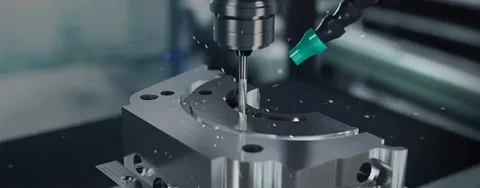
A successful machining run begins long before a tool touches raw stock, and the first steps often determine how smoothly the job will move through production. Shops offering CNC machining near me rely on repeatable checks to ensure each material is suitable for the demands of the process. This evaluation protects tooling, preserves accuracy, and keeps CNC services near me consistent from batch to batch.
Material Composition Checks That Set the Groundwork for Accurate Machining
Material verification starts with identifying the exact composition of the stock. A CNC machine company examines alloy makeup, grain structure, and chemical properties to ensure the material matches the specification listed on the work order.
Many CNC companies near me use spectrometers, certificates of conformance, or visual documentation to validate the material grade. This reduces the chance of machining parts from alloys that behave unpredictably under a CNC plasma cutting machine or mill. Proper composition checks ensure that the part’s mechanical characteristics match what engineers expect.
Hardness Reviews That Determine Tool Choice and Cutting Approach
Hardness influences how tools interact with the material, including wear rate and edge durability. Before approving a run, the shop reviews hardness levels using tests such as Rockwell or Brinell to understand how the stock will behave under load. This information affects tool selection, feed rates, and whether carbide, coated tools, or specialized cutters are required. A CNC machine shop near me may adjust the cutting strategy entirely if the hardness unexpectedly differs from the supplied documentation. Hardness reviews also help prevent costly tool breakage during long CNC machining cycles.
Surface Condition Inspections That Shape the Final Finish Quality
Surface condition plays a larger role in machining stability than many buyers realize. The outer layer of the stock can hide scratches, oxidation, scaling, or irregular coatings that influence how tools grip and cut.
Shops also check surface cleanliness, especially when preparing for a plasma cutter or CNC plasma cutter, since contamination can affect cut quality. Minor imperfections can escalate into dimensional drift when the tool path meets uneven surfaces. A clean, uniform starting surface allows finishing operations to achieve better consistency later in the process.
Thickness and Flatness Verification That Supports Reliable Setup
Dimensional accuracy begins with ensuring the stock itself meets basic tolerances. Thickness and flatness readings help determine whether the material will seat correctly during fixturing. This is particularly important for multi-step CNC machining runs requiring exact positioning.
The shop records these measurements before loading the material onto the table or plates. Irregular thickness can cause uneven tool engagement, while poor flatness complicates clamping and leads to deflection. CNC services near me use calibrated gauges and reference standards to ensure the stock aligns properly before machining starts.
Structural Stability Assessments That Guide Speed and Feed Planning
Structural behavior changes under cutting forces, and unstable material can warp or vibrate during a run. A CNC machine company studies rigidity, elasticity, and how the material responds to impact or pressure.
These reviews help programmers choose appropriate speeds and feeds for both heavy roughing passes and lighter finishing cuts. If the material lacks stability, the shop may modify fixturing, reduce depth of cut, or change the machining order to maintain accuracy. Structural stability checks are especially important for long or thin components that are prone to flexing.
Heat Tolerance Evaluation That Protects Parts During Extended Runs
Heat affects nearly every machining variable—from tool life to dimensional accuracy. Evaluating heat tolerance allows the shop to predict how much thermal expansion or softening may occur during cutting, drilling, or CNC plasma cutting machine operations.
Materials with lower heat tolerance may require more aggressive cooling, different tool coatings, or slower cutting speeds. Shops avoid approving a run until they’re certain the material can handle the temperature fluctuations expected during cutting, especially for extended production jobs.
Batch Consistency Checks That Ensure Uniform Results Across All Pieces
Large orders require strict batch uniformity to keep results consistent. A CNC machine shop near me compares several pieces of the incoming stock to confirm they match in hardness, surface condition, and composition. Variations can lead to uneven machining, inconsistent finish, or unpredictable wear patterns across the run.
Batch checks prevent downstream problems that affect both quality and timing. Shops commonly use sample testing and comparison measurements to validate that each piece behaves the same when machined, cut, or finished. Amtec Solutions Group follows these steps with documented processes to ensure every approved machining run meets engineering, material, and production standards.
